The science bit
Why there's a little sugar in ISOMUM
Darcey Croft · 6 October 2026

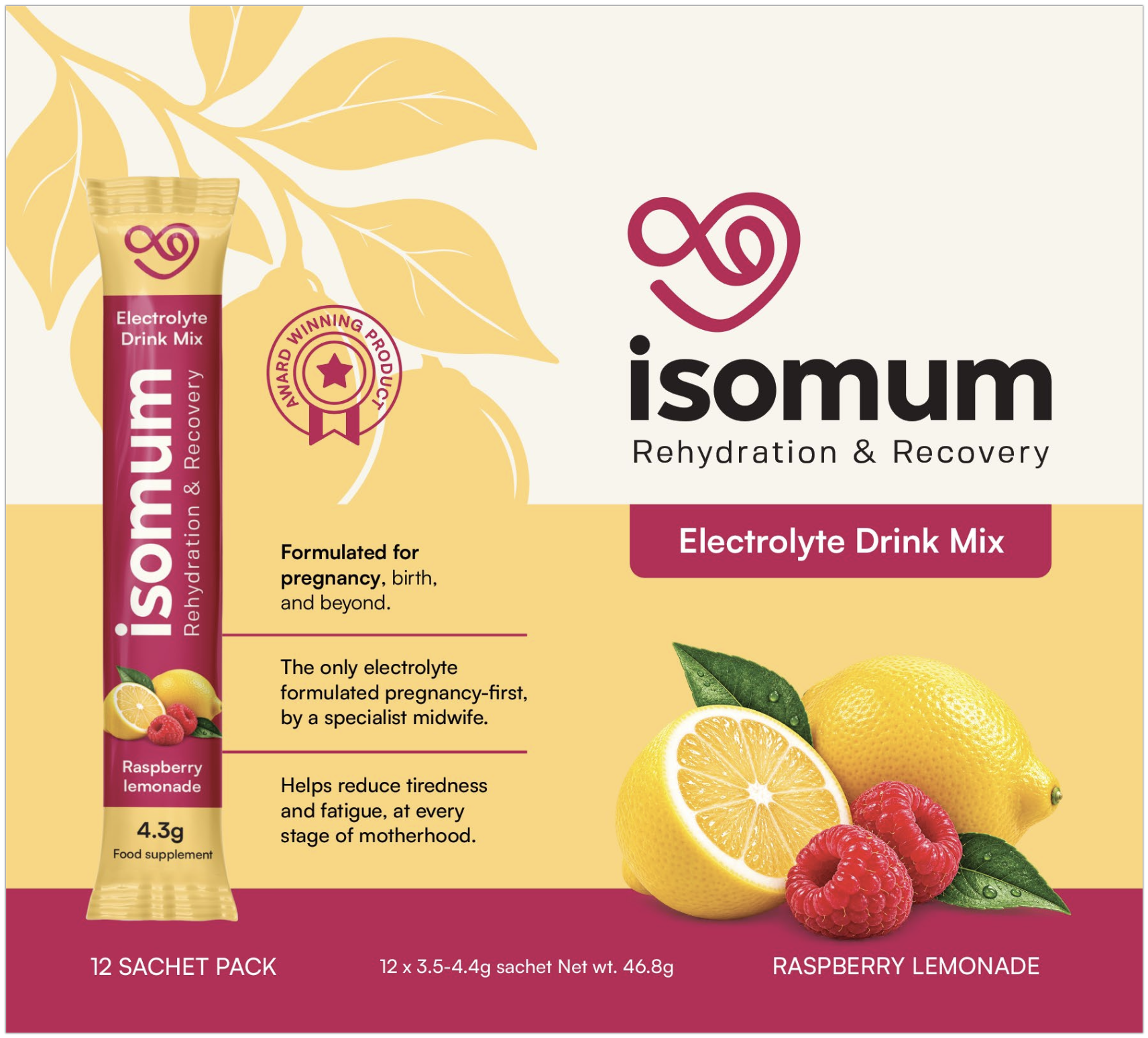
Most electrolyte drinks pick a side. Sports drinks are full of sugar. The newer powders proudly have none. ISOMUM sits in the middle, with about half a teaspoon per sachet, and that was a decision, not a compromise.
This is the plain-English version of why.
First, what are electrolytes?
Electrolytes are essential minerals. Your body uses them every day to manage fluid and keep your muscles and nerves working normally.
Most of the time, a varied diet covers what you need. But some stretches of life make eating and drinking well harder: morning sickness, a long labour, hot weather, or nights that blur into mornings with a newborn.
Salt and sugar travel together
The lining of your gut has a specific carrier that lets salt in, called sodium-glucose co-transport, or SGLT1 for short. Think of it as a revolving door built for two: it's made to carry one molecule of glucose and two of sodium through together, as a pair, so the sugar isn't just along for the ride, it's part of how the door turns.
Doctors have understood this mechanism for decades, and it's the same principle oral rehydration solutions are built on, the drinks used worldwide to treat dehydration. We used that same pairing as our starting point for ISOMUM, then diluted it right down, because this is an everyday drink for pregnancy, not a clinical treatment for dehydration.
Why only half a teaspoon?
You've probably been told to watch your sugar, and in pregnancy that's good advice. Most of the warnings are about large amounts, the kind in a can of fizzy drink or a typical sports drink, built for someone running a half marathon. You're more likely to be sitting on the sofa feeling sick, or awake at 3am, so that's not what ISOMUM is for.
The amount in ISOMUM is a different thing entirely: a small, functional amount, just enough to open that doorway alongside the salt, nothing more. About 2 g per sachet, less than a satsuma, and a long way from the roughly 35 g in a can of cola. If you have gestational diabetes, speak to your doctor or diabetes team about where ISOMUM fits into your day, the same as you would for any new food or drink.
What the sugar actually does
Let's be straight with you, because that matters to us more than sounding impressive.
If you're eating and drinking normally, your body absorbs salt and water perfectly well on its own. The sugar in ISOMUM isn't rescuing you from an ordinary day.
Where it earns its place is on the days when eating is hard: nausea, labour, or those newborn weeks where meals happen in snatches. On days like that, the sachet itself may be providing some of the only sugar reaching your gut, so the pairing with salt can do its job properly.
The rest of the time, it's mostly there for taste. Salt on its own tastes like, well, salt. A touch of sugar rounds it out, which is a big part of why people can actually finish the glass instead of pulling a face halfway through.
What about the zero-sugar brands?
You'll see electrolyte brands with no sugar at all, and they're not wrong, they're just solving a different problem for a different person.
Those formulas are usually built for people who are eating plenty and want extra sodium, often athletes or anyone cutting carbs. Their bodies have no trouble absorbing that sodium without any sugar alongside it.
We built ISOMUM around a different question: what helps someone who might not be eating or drinking much right now? That's a pregnant, labouring, or newly postnatal body, not a gym-goer. Neither approach is more "scientific" than the other. They're just designed for different days.
So, to sum up
- A little sugar, about half a teaspoon per sachet, to work alongside the salt and to make it taste good.
- Low sugar by UK standards, so it's a genuinely different product from a sports drink.
- No added vitamins, so you can drink it alongside your prenatal vitamin supplements.
- No caffeine. No artificial colours or sweeteners.
- Magnesium at a meaningful dose that contributes to the reduction of tiredness and fatigue.
Nothing in the sachet is there by accident. Every ingredient had one question to answer first: is this right for pregnancy? The sugar is no exception. It's there on purpose, in the smallest amount that still does its job.